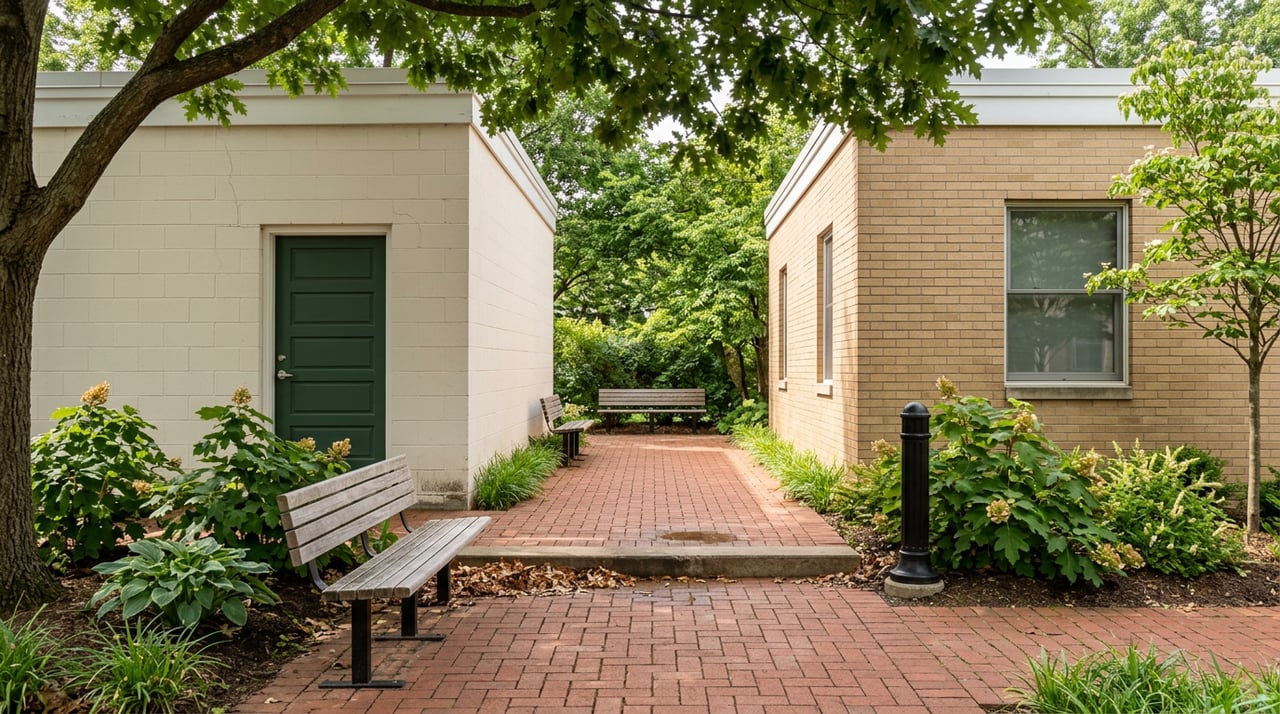
If you live in Old Greenbelt, you already know the trick to a full weekend here: you don't drive to it. You walk to it. The farmers market, the movie theater, the live music, the community stage, and the biggest festival of the year all sit inside a two-hundred-yard stretch of Centerway and Crescent Road. That geographic accident, baked into the 1937 plan, is what makes summer in this town feel less like a schedule and more like a loop you keep circling back to.
This is a guide to that loop over the next several weekends, ending with the Labor Day countdown. If you live somewhere else in the DMV, this is what your neighbors in GHI are doing on any given Sunday.
The 200-Yard Rule
Most Prince George's County town centers are stitched together by parking lots. Greenbelt is stitched together by a pedestrian courtyard. Four of the anchors below share the same block, and the fifth is one lawn away.
| Anchor | Address | What it is |
|---|---|---|
| New Deal Cafe | 113 Centerway | Nonprofit cafe and live music venue |
| Greenbelt Arts Center | 123 Centerway | Community theater |
| Old Greenbelt Theatre | 129 Centerway | Single-screen historic cinema |
| Greenbelt Farmers Market | 25 Crescent Road | Sundays behind the Municipal Building |
| Roosevelt Center / Braden Field | 101 Centerway | Festival grounds and community lawn |
Add the Greenbelt Museum, the Youth Center, and the Aquatic & Fitness Center within the same short walk, and the summer becomes a matter of picking which door to open next. That density is the thesis of this post. Every section below is one door on the same block.
Sunday Belongs to the Market
The Greenbelt Farmers Market runs every Sunday from 10 a.m. to 2 p.m. in the lot behind the Municipal Building at 25 Crescent Road, and the market will be closed on September 6 (Labor Day weekend) and November 29 (Thanksgiving weekend). Mark those two Sundays now. They are the only weeks all season when you have to plan around a market being dark.
The lineup is not a generic produce tent. Vendors offer produce, pasture-raised meats, sustainable seafood, soaps, ice cream, breads and baked goods, mushrooms, flowers, bedding plants, vegetable and herb plant starts, honey, coffee, wine, baked desserts, and prepared entrees and sides, both frozen and hot. Longtime market-goers know the rhythm: Glade-Link Farms returns each season from Frederick County with bouquets, strawberries, blueberries, blackberries, red raspberries, and vegetables, and Pat Hochmuth farms 250 acres, twenty-five of them planted in more than 220 varieties of vegetables, and is best known at the market for fall pumpkins and sweet potatoes. Atwater's brings breads from Baltimore. Simple Pleasures brings ice cream. Zeke's brings coffee.
The reason to arrive before 11 a.m. is not scarcity. It is heat. By noon in July the lot is a griddle. Walk up early with a tote, then peel off to a shaded porch on Centerway.
What's Playing at 129 Centerway
The Old Greenbelt Theatre is not a multiplex, and if you have lived here more than a summer you already know that is the point. Built between 1937 and 1938, it features the Art Deco style of architecture, specifically the Streamline Moderne design popular in the 1930s, and it opened on September 21, 1938, with its first film, Little Miss Broadway, starring Shirley Temple.
Two things about the theater that don't show up on the marquee:
First, the summer programming leans on families. Beyond first-run movies, the theatre hosts events, discussions, and even summer specials, including free Wednesday matinees of children's films. If you have kids at home in July or August, the free Wednesday matinee is the single most useful line item in your week.
Second, the survival math is real. The Greenbelt Cinema is more than just a nostalgic gem. It relies heavily on the loyalty of longtime Greenbelt residents to survive in today's entertainment landscape. If you have not bought a ticket there in a while, this is the season to do it. The theater is at 129 Centerway; you can find current showtimes on the theater's own site.
Music You Can Walk Home From
Six doors down, the New Deal Cafe has been the pulse of the courtyard for three decades. The New Deal Cafe has supported the arts and culture community for over 30 years as a nonprofit, member-driven organization offering live local music almost every night of the week. That last clause is the one that matters. Almost every night. If your default plan is "we'll figure it out Friday," the answer is already booked and free to walk into.
A few 2026 nights to circle:
- La Única at the New Deal Cafe on June 6, 2026
- Jillian Matundan on May 3, and rotating residencies from Michael Grasso's Not 2 Cool Jazz and the Dirty Soul Band across the summer, per the venue's public calendar
Two practical notes for residents. The cafe is small; the venue has a capacity of 114 people, which means a popular Saturday act fills up. And the performers work for tips. A minimum tip of $10 is recommended for the musicians, who rely solely on tips for their pay. Bring cash.
For the local music-and-awards crowd, the cafe's shelf keeps getting heavier. The Washington City Paper's annual Best of DC poll has given the cafe more awards and higher standings each year, and in 2024 it was a runner-up for Best Jazz/Blues Venue.
The Stage Next Door
Between the cafe and the movie house sits the Greenbelt Arts Center at 123 Centerway. GAC is the kind of community theater that people in bigger cities pay a subscription to imitate. GAC produces four to six shows per year and hosts an additional six guest shows per year, plus a few musical concerts. Ticket prices sit in the low twenties for most productions.
If you have never gone, pick a guest show before you pick a mainstage production. The guest slate is where the surprises live: chamber concerts, poetry-driven song cycles, Shakespeare from resident companies like the Rude Mechanicals. If you have kids old enough for a two-hour show, GAC is the closest thing to a first-theater experience in the county that doesn't require a parking garage.
Counting Down to September 4
Every summer in Greenbelt bends toward the same four days.
The 2026 Greenbelt Labor Day Festival runs Friday, September 4 through Monday, September 7, at Roosevelt Center. The festival was started in 1955 to raise funds to build a Youth Center, and it has been held every year since by the Greenbelt Labor Day Festival Committee, making it one of Maryland's largest all-volunteer-organized events.
Two things are new this year that longtime attendees should know before Labor Day weekend.
First, the rides. The Labor Day Festival will have a new carnival operator in 2026: Snyder's Attractions. If your kids have opinions about which carnival came last year, that's the change.
Second, the parking playbook has not changed and is still underused. You can park at Greenbelt Elementary or Eleanor Roosevelt High School and ride the free shuttle to the festival, and the shuttle bus also picks up from Springhill Lake Rec Center, Greenbelt Metro, and Greenbelt Station Townhouses. If you live in GHI, you already walk. If you live in Greenbelt East or Greenbelt West, the shuttle is faster than looping Crescent looking for a curb spot.
The four-day schedule pulls in every corner of the town. In past years Braden Field has hosted the Diaper Derby for crawlers and toddlers, a balloon waddle race, a water balloon toss, and a pie eating contest, while the Youth Center runs a photo scavenger hunt and basketball tournaments, and the Tour de Greenbelt bike ride leaves the New Deal Cafe at 9 a.m. bound for Greenbelt Station and at 10 a.m. bound for Schrom Hills Park. The Monday parade winds through Roosevelt Center at 10 a.m. Food comes from thirteen booths with menus flagged for gluten-free, vegan, and vegetarian options. Admission is free.
If you have out-of-town family visiting over Labor Day, plan the weekend backwards from Monday morning. Parade first, funnel cake next, carnival last, and the drum circle in between if the kids can hang on that long.
The Point of the Loop
Here is the thesis, said plainly. In most Prince George's County neighborhoods, a full summer weekend requires a car and a plan. In Greenbelt, it requires a pair of shoes and a rough sense of what time the market closes. That is the specific value of living inside the 1937 plan, and it is the reason so many GHI co-op residents stay for decades and so many new buyers, once they spend one Sunday inside the loop, stop looking anywhere else.
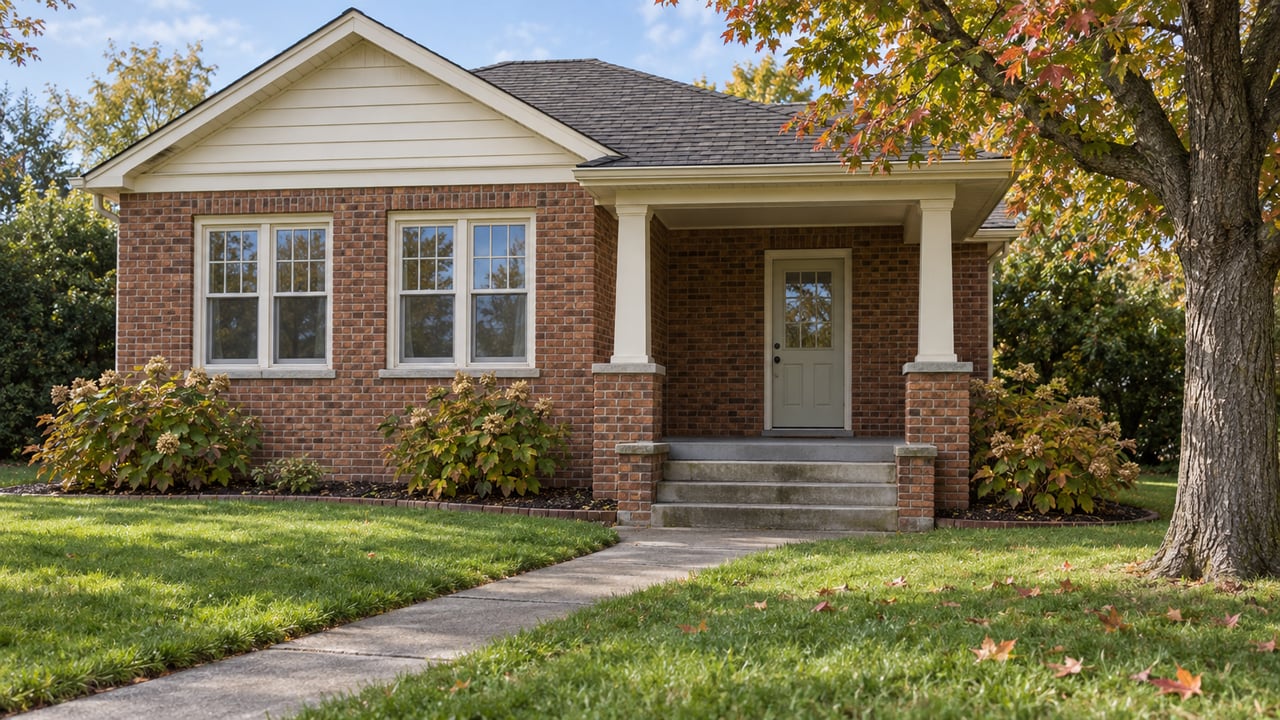
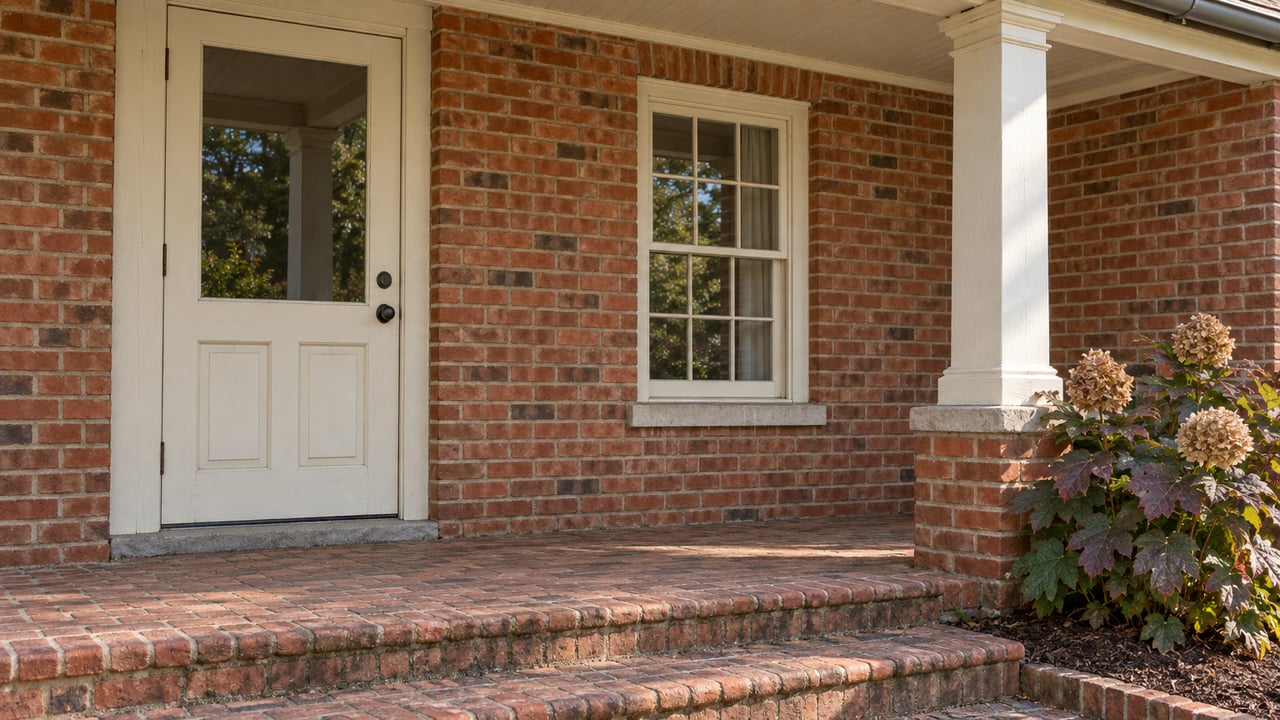
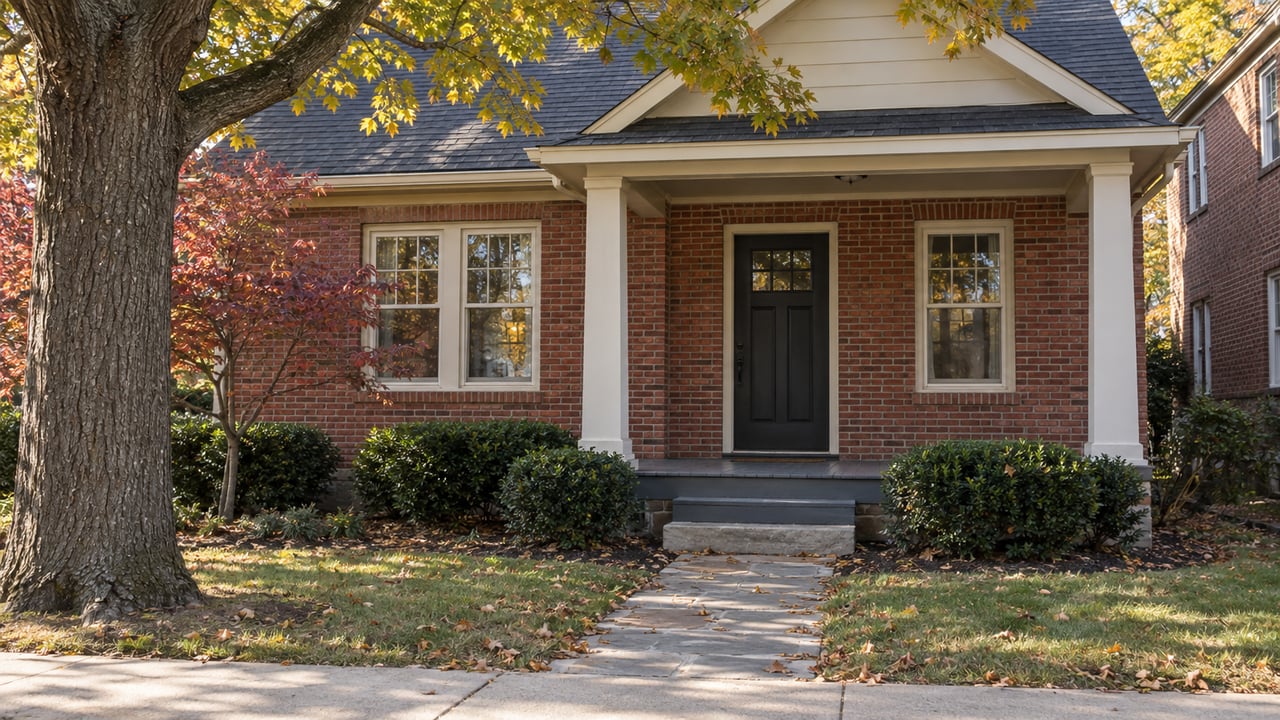
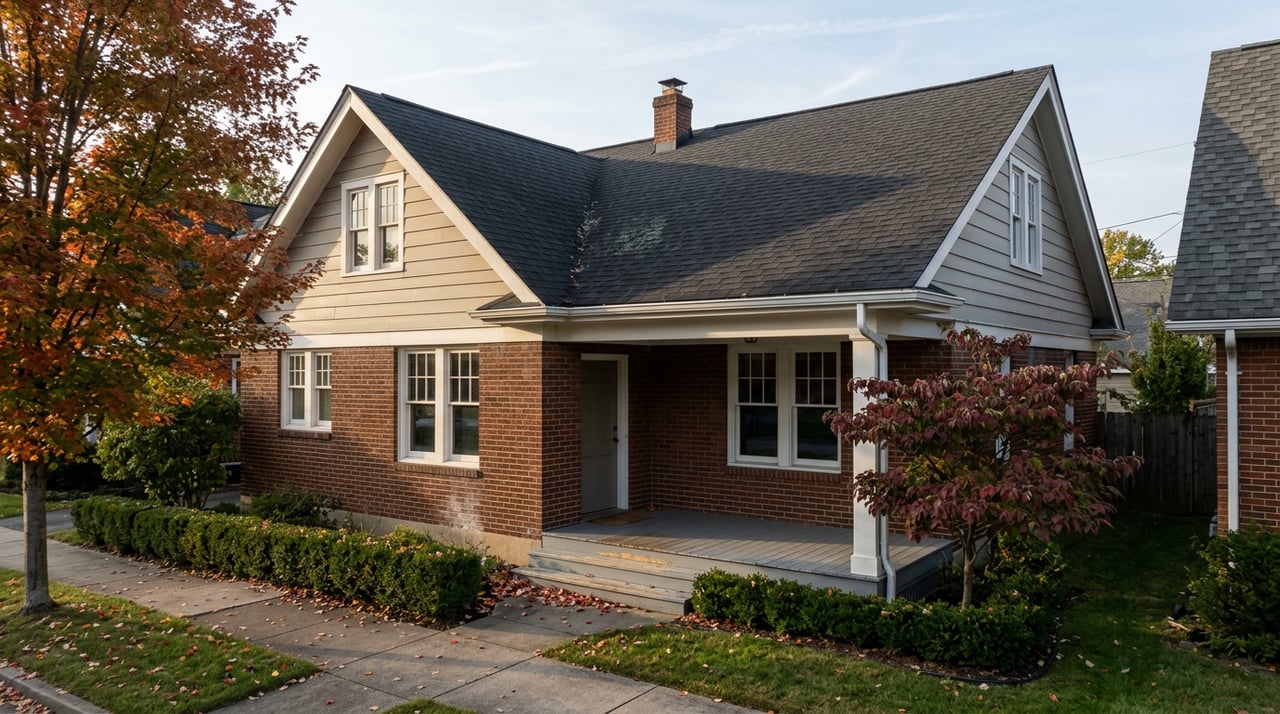
The homes here reward that kind of resident. A GHI unit is not the same product as a fee-simple townhouse in Greenbelt East, and a bungalow near Buddy Attick Park trades differently than a Springhill Lake condo. If you are thinking about buying into Greenbelt this year or listing a home you have owned inside the loop, Kim Kash knows the co-op paperwork, the block-by-block pricing, and which weekends the market is closed.
Let's connect.