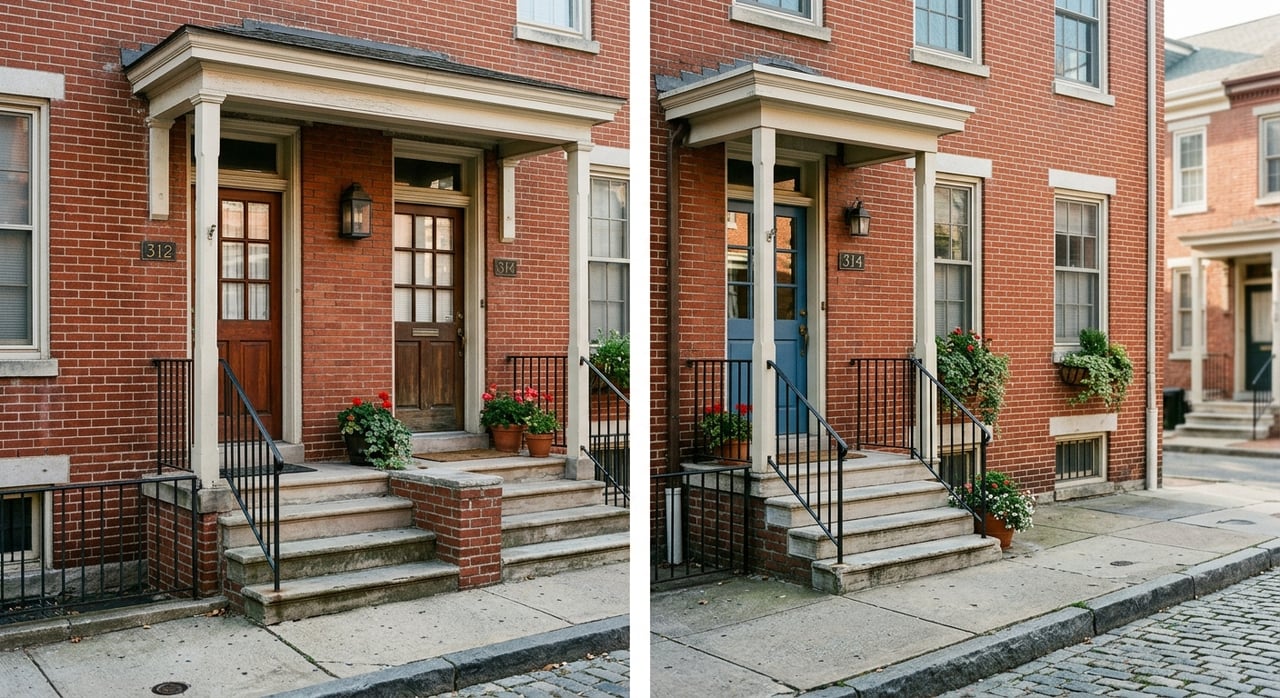
If you are comparing home types in Brightwood and Manor Park, you are probably asking a practical question: What kind of home will fit your budget, upkeep comfort, and day-to-day lifestyle best? These two Northwest DC neighborhoods offer a mix of older housing, classic pre-war character, and different price points, which can make the choice feel less obvious than it first appears. This guide will help you sort through rowhomes, two-family or semi-detached options, and detached homes so you can weigh tradeoffs with more confidence. Let’s dive in.
Brightwood And Manor Park At A Glance
Brightwood and Manor Park are Ward 4 neighborhoods in Northwest Washington, DC. City planning materials describe the broader Rock Creek East area as park-like because of its tree cover, lower densities, and proximity to Rock Creek Park, while also noting the importance of preserving existing homes and offering a variety of housing choices.
That mix is part of what makes these neighborhoods appealing to buyers. You will see different housing types, different building eras, and some meaningful variation from block to block. If you are trying to decide between attached, semi-attached, or fully detached living, local housing history can give you helpful context.
How The Housing Stock Developed
Brightwood Grew Over Time
Brightwood began as rural tracts and small settlements before moving into subdivision in the 1890s. By 1916, the area was described as fully settled, and the Ward 4 Heritage Guide describes Brightwood and Brightwood Park as a mix of townhouses, small apartment buildings, and comfortable single-family homes, with some buildings dating to the 19th century.
For you as a buyer, that often means more architectural variety. In Brightwood, homes may reflect different building periods, different renovation standards, and different lot setups even within a short distance.
Manor Park Is More Uniform
Manor Park developed later than Brightwood. The Ward 4 Heritage Guide says most homes there were designed and built in the late 1930s by George Santmyers, with some 1920s Wardman homes and a few earlier houses.
That history often creates a more consistent feel from one block to the next. If you like neighborhoods where the housing stock feels a bit more visually cohesive, Manor Park may stand out for that reason.
Comparing The Main Home Types
Rowhomes In Brightwood And Manor Park
DC land-use rules describe moderate-density residential areas as rowhouse neighborhoods, and a row dwelling has no side yards. In Brightwood, the Comprehensive Plan specifically identifies Wardman rowhouses as an important architectural resource.
For many buyers, a rowhome offers classic DC character and an efficient use of space. You may find the curb appeal is centered on the front facade, stoop, porch, and masonry details rather than side-yard space.
What Rowhomes May Offer You
- Attached living with no side yards
- A more compact lot footprint
- Classic architectural details, especially in older housing stock
- Exterior upkeep that often focuses on the front facade, windows, masonry, and porch or stoop details
What To Think About With Rowhomes
Because many rowhomes are older, condition can vary widely. You may want to pay especially close attention to masonry condition, window age, roof maintenance, and any signs that older exterior features have been altered over time.
Two-Family And Semi-Detached Options
DC code does not use the word duplex as a primary planning term. Instead, it defines a two-family dwelling as a flat and a semi-detached dwelling as a one-family home with one shared wall and one side yard.
That distinction matters when you are looking at listings. In the local market, a home labeled as a duplex may refer to a true two-unit property or a semi-detached home, and those can feel very different in layout, privacy, and maintenance.
Why This Category Can Be Tricky
If you are comparing homes in this group, it is worth confirming exactly what the property is. A two-unit setup may involve separate living areas or different maintenance considerations, while a semi-detached house may feel closer to a single-family home with just one shared wall.
What To Review Carefully
- Whether the property is a one-family or two-family layout
- How shared walls affect sound, maintenance, and repairs
- Whether separate entrances, basement areas, or exterior elements need extra review
- Overall upkeep of masonry, windows, rooflines, and drainage points
Detached Single-Family Homes
DC’s low-density residential category is built around detached and semi-detached homes with front, back, and side yards. A detached dwelling is completely separated from other buildings and has two side yards.
Brightwood includes single-family homes, and Manor Park also includes single-family detached homes alongside rowhouses and apartments. If you want more separation from neighboring structures, detached homes are usually the clearest fit.
What Detached Homes Often Mean
Detached homes typically offer more privacy and more outdoor space. They may also give you more flexibility for parking or future exterior changes, though they usually come with more exterior maintenance because more of the structure is exposed.
What To Expect On Upkeep
Compared with attached housing, detached homes often shift the workload toward roof care, drainage, siding or exterior wall maintenance, and yard care. If you enjoy outdoor space, that may feel like a plus. If you want lower exterior demands, it may feel like a tradeoff.
How Age Affects Your Search
Brightwood Often Shows More Variation
Brightwood’s housing stock reflects late-19th-century origins, 1890s subdivision, early-20th-century growth, Wardman-era construction, and later infill. In practical terms, buyers there are more likely to encounter older masonry, more block-to-block variation, and a wider spread in renovation quality.
That can create real opportunity, but it also means you should compare homes carefully. Two properties at similar price points may differ a lot in updates, layout, and long-term maintenance needs.
Manor Park Often Feels More Consistent
Because most Manor Park homes were built in the late 1930s, the housing stock can feel slightly newer and more uniform. You may still see differences in condition and renovation level, but the broader housing pattern is often more consistent than in Brightwood.
If you value predictability in home style and age, that can be a meaningful advantage. It may make your search feel a little easier to narrow.
Historic And Exterior Change Considerations
The Comprehensive Plan notes that residents in Rock Creek East want existing housing renovated and rehabilitated. It also notes that Brightwood’s Wardman rowhouses and older homes remain vulnerable to demolition or unsympathetic alteration where protections are limited.
That is why property-specific designation status matters. Before planning exterior changes, it is smart to confirm whether a home is individually designated or located in a historic district, because exterior work may require permit review.
Exterior Features Worth Reviewing
DC’s Historic Preservation Office identifies several recurring review topics for historic properties:
- Windows
- Walls and foundations
- Roofs
- Porches and steps
- Basement entrances and windows
- Additions
- New construction
Its masonry guidance also notes that older brick walls often need repointing, careful cleaning, and mortar matching. It warns that sandblasting is prohibited and that moisture problems often enter through mortar joints, roofs, or windows rather than the masonry units themselves.
Matching Home Type To Your Budget
Current pricing snapshots suggest Brightwood tends to run somewhat higher than Manor Park. Zillow’s latest figures put Brightwood’s average home value at $681,632 and Manor Park’s at $601,433, which is a gap of about $80,000.
At the same time, broader market snapshots vary by platform. Redfin’s combined Brightwood-Manor Park market showed a median sale price of $674,773 over the three months ending May 2026, while Realtor.com showed a median listing price around $700,000.
The big takeaway is simple: neighborhood boundaries and metrics are not identical across platforms, so price data will not always match perfectly. Still, the available data suggests Brightwood often prices a bit higher, while Manor Park may offer a somewhat lower entry point for similar pre-war housing types.
A Simple Way To Choose
If you are trying to narrow your options, start with three questions:
- Do you want attached, semi-attached, or fully detached living?
- How much exterior maintenance are you comfortable taking on?
- Is your priority more space and privacy, or a lower entry point into the neighborhood?
In many cases, rowhomes appeal to buyers who want classic DC housing and a compact footprint. Semi-detached or two-family properties can offer a middle ground, while detached homes often work best for buyers who value separation, yard space, and flexibility.
The right answer depends on how you want to live, not just what looks best online. A calm, informed comparison can save you time and help you focus on homes that truly fit your goals.
If you want help sorting through Brightwood and Manor Park options, comparing layouts, or understanding which home type makes the most sense for your budget and priorities, Kim Kash is here to help.
FAQs
What home types are common in Brightwood and Manor Park?
- Brightwood and Manor Park include rowhomes, small apartment buildings, semi-detached homes, two-family properties, and detached single-family homes.
What is the difference between a duplex and a semi-detached home in DC?
- In DC terms, a semi-detached dwelling is a one-family home with one shared wall and one side yard, while a two-family dwelling refers to a flat, so a listing labeled duplex may need closer review to confirm the actual layout.
Are Brightwood homes older than Manor Park homes?
- In general, yes. Brightwood reflects several earlier development periods, while Manor Park housing stock is largely from the late 1930s, with some 1920s and earlier homes.
What should buyers check on older rowhomes in Brightwood?
- Buyers should look closely at masonry condition, windows, roofs, porches or steps, and signs of moisture issues, especially in older brick homes.
Is Manor Park usually more affordable than Brightwood?
- Current market snapshots suggest Manor Park often has a slightly lower entry point than Brightwood, though pricing can vary depending on the platform, home type, and exact location.
Do exterior changes in Brightwood or Manor Park need special review?
- Some properties may require permit review for exterior work if they are individually designated or located in a historic district, so buyers should confirm a home’s specific status before planning changes.