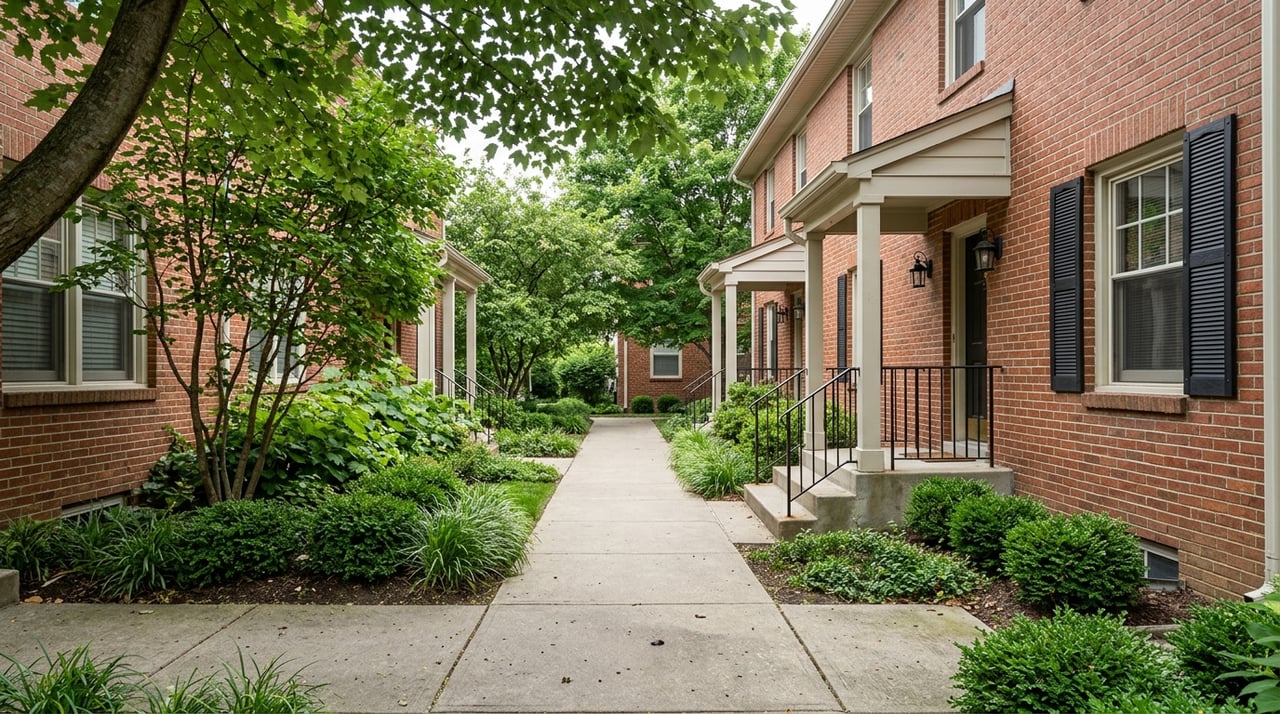
If you are shopping in Laurel, you may be noticing the same thing many buyers are: attached homes are becoming a bigger part of the conversation. That can be good news if you want lower-maintenance living, a more approachable price point than some detached homes, or a layout that fits a commute to Washington or Baltimore. The key is knowing that not every townhome or condo works the same way, even when they look similar from the street. This guide will help you understand the options showing up in Laurel’s growing market and what to ask before you make an offer. Let’s dive in.
Why Laurel buyers are watching attached homes
Laurel’s housing story is being shaped by planning, transit, and a mix of new development formats. The City of Laurel’s Economic and Community Development department handles zoning compliance, development review, affordable housing, and master plan work, and the city is in a Master Plan Update cycle for 2025 to 2026.
That matters because it points to continued focus on how housing gets added and where it fits. In practical terms, you are not just seeing one type of attached housing in Laurel. Local planning materials show a mix that includes attached townhomes and stacked townhome condominiums.
Transit is another big reason these homes stay in demand. The MARC Camden Line serves both Laurel and Laurel Racetrack, connecting the area to Baltimore and Washington, D.C. Prince George’s County planning also points to corridor access, transit, and master plans as important drivers of growth in the Laurel area.
For buyers, that creates more than one path into homeownership. County planning notes that townhomes are the most immediate for-sale opportunity, while condominiums are more likely to make sense in mixed-use settings and over a longer timeline.
Townhome and condo types in Laurel
Fee-simple townhomes
A fee-simple townhome usually means you own the home and the lot, while the homeowners association handles shared property and common features. Prince George’s County describes this as the homeowner owning the house in fee simple while the association owns the common grounds and facilities.
That setup can feel familiar if you want a more traditional ownership structure. You may still pay HOA dues, but your rights and responsibilities are different from a condominium. In some communities, the HOA may also maintain private infrastructure.
A Laurel planning packet gives a useful local example. In one townhome community, HOA maintenance covered private streets, sidewalks, curb and gutter, trees, and subdivision structures. That is why buyers should not assume the same maintenance rules apply in every townhome neighborhood.
Condo townhomes and stacked townhomes
Some homes look like townhomes but are legally condos. This includes condo townhomes, stacked townhomes, and two-over-two designs.
Prince George’s County defines condo ownership as owning the air space inside your unit, along with an undivided interest in the common elements. Those common elements can include parking, recreation areas, utilities, common grounds, and parts of the structure.
This format can appeal to buyers who want a townhome-style feel with less exterior responsibility. County planning also notes that two-over-twos can provide a value alternative as townhome prices rise. Laurel planning materials show stacked townhome condominium units in the local pipeline, so this is not just a theory. It is part of what buyers are likely to see here.
Traditional condominiums
Traditional condos are often single-level homes in a larger building, sometimes with elevator access. In markets like Laurel, they tend to fit best in places with more of a mixed-use or transit-oriented setting.
Prince George’s County planning says condominiums become more viable where there is a stronger amenity base. That means you are more likely to see them where retail, daily services, and transit access support that style of living.
What you really own matters most
When buyers compare townhomes and condos, the biggest difference is often not the floor plan. It is the legal structure behind the property.
With a fee-simple townhome, you generally own the house and lot, while the HOA owns and maintains shared areas. With a condo, you usually own the interior air space of the unit and share ownership of the common elements with other unit owners.
That distinction affects maintenance, insurance, monthly costs, and even how future resale questions get answered. In Laurel, where similar-looking homes may fall under very different ownership structures, this is one of the first things to confirm.
How association fees can differ
Condo fees
In a condominium, the association is responsible for the common elements. Under Maryland law, the council of unit owners must maintain master property insurance for the common elements and, for attached or multi-family units, the basic structure of the building except for owner-installed improvements and betterments.
Condo assessments also fund current common expenses and reserves. Depending on the declaration, some utility or limited-common-element costs may be assigned in a specific way. This is why one condo fee may look very different from another, even within the same area.
As an owner, you will usually also need a separate unit-owner insurance policy. According to the Maryland Insurance Administration, that policy can help cover contents, additions and betterments, liability, and loss assessment exposure.
There is another point buyers should understand clearly. If a loss starts in a single unit, the owner where the loss originated may be assessed part of the master policy deductible, up to $10,000. If the loss starts in the common elements, the deductible becomes a common association expense.
HOA dues for townhomes
In an HOA-governed townhome community, the association typically manages community-owned property and collects assessments. Prince George’s County notes that this can include things like parking areas, community centers, pools, and other common facilities.
The exact scope varies by community. In some Laurel-area settings, HOA responsibility can extend beyond landscaping and signage to private roads, sidewalks, trees, and more. That means monthly dues need to be viewed in context, not just as a number.
For many buyers, townhome HOA dues are separate from the mortgage payment and paid directly to the association. The main takeaway is simple: always match the fee to the maintenance map and services provided.
Questions to ask before you write an offer
Before you move forward on a condo or townhome in Laurel, ask for clarity early. Prince George’s County says each association has its own governing documents, and Maryland condominium law requires resale documents to be furnished before closing.
It is smart to request those materials as soon as possible so you have time to review them. Here are some of the most useful questions to ask:
- What do I legally own?
- Is this property fee-simple or condominium ownership?
- If it is a stacked or two-over-two layout, how is it legally classified?
- What does the monthly fee cover?
- What is specifically excluded from that fee?
- Who handles the roof, siding, windows, landscaping, trash, and snow removal?
- Are private roads or sidewalks maintained by the association?
- Is there a master association or more than one layer of association dues?
- What insurance is required for the owner?
- Is there any deductible exposure if a loss starts in the unit?
- Are there pending special assessments or reserve concerns?
- Are there rules for pets, parking, rentals, or exterior changes?
These questions can save you from surprises later. They also help you compare homes fairly, especially when two properties look similar online but carry very different ownership obligations.
How to compare options in Laurel
Start with your daily routine
For many Laurel buyers, the housing decision is tied closely to commuting. With MARC access to both Washington and Baltimore, it helps to compare not just price and square footage, but also how a home fits into your real day.
Ask yourself whether the location works best as walk-to-transit, bike-to-transit, or drive-to-transit. Also think about parking, route convenience, and how often you expect to use rail service. The right fit is often the one that supports both your budget and your weekday rhythm.
Compare maintenance, not just style
A townhome may offer more direct ownership and a more traditional setup. A condo townhome or stacked condo may offer less exterior responsibility. Neither is automatically better.
The better question is how much upkeep you want to manage yourself. If you prefer fewer exterior responsibilities, a condo structure may be appealing. If you want more control over the property itself, a fee-simple townhome may feel like a stronger fit.
Look at the community structure
Some communities are simple. Others have layered association structures, shared amenities, or more extensive maintenance obligations.
That is especially important in a market like Laurel, where growth is happening through different housing formats at once. The monthly fee, the governing documents, and the association responsibilities all shape the true cost and experience of ownership.
Why this matters in Laurel’s growing market
Laurel’s market is not moving in just one direction. Local planning and county analysis point to a mix of attached housing options, with townhomes leading the near-term for-sale market and condominiums playing a role in more mixed-use settings over time.
For buyers, that means more choice. It also means more need for careful review, because legal structure, maintenance responsibilities, and insurance obligations can vary a lot from one community to the next.
A calm, informed approach can make the search much easier. When you understand what you own, what the association covers, and how the location fits your life, you are in a much stronger position to choose well.
If you are weighing townhome and condo options in Laurel, having local guidance can make those side-by-side comparisons much clearer. If you want help sorting through ownership structures, fees, commute fit, and offer strategy, Kim Kash is here to help.
FAQs
What is the difference between a Laurel townhome and a Laurel condo?
- In general, a fee-simple townhome means you own the home and lot, while a condo usually means you own the interior air space of the unit and share ownership of common elements.
What is a stacked townhome condo in Laurel?
- A stacked townhome condo is a home that may look like a townhome from the outside but is legally a condominium, often with one unit above another or in a two-over-two layout.
What do condo fees usually cover in Laurel-area communities?
- Condo fees often help cover common-area maintenance, insurance for common elements, reserves, management, landscaping, snow removal, and amenity upkeep, but the exact coverage depends on the association documents.
What do HOA fees usually cover in Laurel townhome communities?
- HOA fees often support maintenance of shared property and amenities, and in some communities they may also cover private roads, sidewalks, trees, and other subdivision infrastructure.
Why are townhomes popular in Laurel right now?
- Prince George’s County planning identifies townhomes as the most immediate for-sale opportunity in the Laurel area, and demand is also supported by corridor access and MARC service to Washington and Baltimore.
What should buyers review before buying a condo or townhome in Laurel?
- Buyers should review the legal ownership structure, governing documents, fee coverage, maintenance responsibilities, insurance requirements, reserve questions, and any rules related to parking, pets, rentals, or exterior changes.